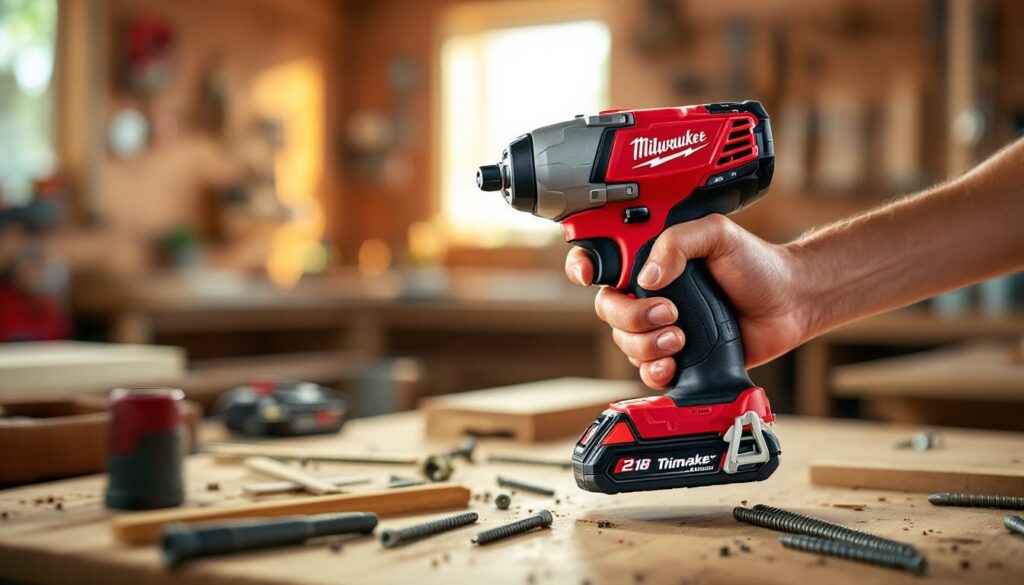

If you’ve spent ten minutes wrestling with a manual screwdriver on a stubborn fastener, you already know why a cordless impact driver belongs in your toolbox. A Milwaukee cordless impact driver delivers rotational force that leaves regular drills in the dust, perfect for driving lag bolts into deck framing, sinking 3.5-inch decking screws, or busting loose rusted fasteners without wearing out your wrist. Unlike a standard drill, an impact driver uses a hammer-like mechanism to deliver bursts of torque, making quick work of tasks that’d otherwise eat up your Saturday. Whether you’re hanging cabinets, assembling fence sections, or tackling automotive work, Milwaukee’s reputation for durability and power makes their cordless impact drivers a legitimate investment rather than just another gadget.
Table of Contents
ToggleKey Takeaways
- A Milwaukee cordless impact driver uses hammer-like torque bursts to tackle stubborn fasteners, lag bolts, and decking screws far more efficiently than standard drills or manual tools.
- Milwaukee’s brushless motor technology and rigorous job-site testing deliver reliability and longevity that justifies the $150–300 investment across residential and professional applications.
- The M18 model offers 1,500 in-lbs of torque for structural work, while the compact M12 provides lighter duty with better maneuverability for cabinet hanging and trim applications.
- A single fully charged 5.0 Ah M18 battery typically powers 150–200 fastener applications, with runtime varying based on fastener size and material.
- Proper technique—including pre-drilling hardwoods, matching fastener types to tasks, and using reduced torque for delicate work—maximizes results and prevents fastener damage.
- Battery maintenance, quality bits, and appropriate PPE like ear protection ensure your Milwaukee tool delivers consistent performance and durability for years of projects.
Why Milwaukee Cordless Impact Drivers Stand Out in the Market
Milwaukee earned its reputation by building tools that survive actual job sites, not just product photography. Their cordless impact drivers feature brushless motor technology, which means fewer internal parts wearing out and longer tool life, something that matters when you’re dropping $150-plus on a single tool.
The brand’s M18 and M12 lines dominate for a reason: they’re engineered with real construction sites in mind. Milwaukee tests their tools in conditions most homeowners never encounter, so when you grab one for a weekend project, you’re getting hardware designed to last. The red color might seem cosmetic, but Milwaukee users recognize it as a sign of quality and interchangeability across their entire battery system.
Compared to budget-tier competitors, Milwaukee cordless impact drivers deliver consistent performance without the torque variation that leaves fasteners either stripped or barely driven. That reliability matters when you’re working alone and need a tool that won’t quit halfway through a project. Homeowners and pros alike choose Milwaukee because experts tested cordless drills to identify top performers, and Milwaukee consistently ranks among them.
Key Features That Make Milwaukee a Top Choice
Milwaukee’s cordless impact drivers pack features that directly solve common DIY headaches. The compact head and lightweight design, typically under 4 pounds, reduce fatigue during extended use, which makes a real difference when you’re hanging sheet rock or assembling outdoor furniture for hours.
Torque control is a game-changer. Most Milwaukee models offer adjustable settings, so you can dial down power for delicate work like driving trim screws into 1×6 boards without mushrooming the head, or crank it up for structural bolts and carriage screws where you need maximum grip.
The quick-change chuck accepts both 1/4-inch hex and 1/2-inch square drives, meaning you’ve got flexibility in bit options without hunting for adapter sleeves. Built-in LED work lights help you see into cabinet corners and dark joists, a small feature that saves frustrating moments when you can’t quite see the fastener you’re driving.
Battery Power and Runtime Expectations
Milwaukee’s M18 batteries deliver serious staying power. A single fully charged 5.0 Ah (amp-hour) battery typically runs 150-200 fastener applications before needing a refresh, depending on fastener size and material. That’s enough for most weekend projects without swapping batteries mid-task.
Runtime depends heavily on the fastener. Driving 2.5-inch deck screws into soft pine pulls more amps than driving 1.25-inch trim screws into poplar. If you’re tackling a deck frame where you’re sinking dozens of bolts, expect battery drain faster than a simple cabinet hanging job.
Milwaukee’s dual-battery charging system means you can keep working while one battery recharges, a practical touch for longer projects. The M12 line offers lighter duty with more compact batteries, trading some torque and runtime for a genuinely pocket-sized tool suited to trim work and light-duty fastening.
Real-World Performance for Home Projects
Pull a Milwaukee cordless impact driver from the toolbox and it immediately earns its keep on actual projects. Hanging upper cabinets? Drive 2.5-inch trim head screws into wall studs without stripping the screw head or muscling the driver in your hand. The anti-rotation handle keeps torque from twisting your wrist when the bit bites into a fastener.
Building deck railings that require 3/8-inch lag bolts into pressure-treated posts? Milwaukee’s impact mechanism bites into the wood and drives those bolts home in seconds, eliminating the repetitive struggle of hand-tightening or the bind-up that happens with standard drills. For automotive work, removing seized bolts on lug nuts or undercarriage fasteners, the rotational force and hammer action cut task time by 70% compared to manual wrenching.
Interior projects benefit equally. Assembling IKEA cabinets becomes genuinely quick. Fastening hinges, handles, and mounting plates for shelving goes from tedious to efficient. Even replacing outlet boxes and rough-in work for electrical runs faster and with less physical fatigue.
Resources like Today’s Homeowner provide seasonal maintenance guides where an impact driver streamlines everything from replacing deck fasteners to reassembling shutters after weatherproofing. The tool scales from delicate trim work to serious structural fastening without requiring you to swap equipment.
Choosing the Right Milwaukee Model for Your Needs
Milwaukee’s lineup includes options for different scales of work. The M18 impact driver serves as the workhorse, delivering 1,500 in-lbs of torque and running on the larger 18V batteries that also power their saws, grinders, and string trimmers. If you already own Milwaukee 18V tools, the M18 driver fits seamlessly into your ecosystem, batteries and chargers swap across the whole line.
The M12 compact impact driver sacrifices some torque (around 1,000 in-lbs) but weighs less and fits into tighter spaces. It’s genuinely useful for cabinet hanging, light-duty assembly, and situations where you’re reaching into confined spaces. Think small-scale interior work rather than structural applications.
Consider your existing toolkit. If you’re already invested in Milwaukee batteries, adding an impact driver to that collection makes financial sense. If starting fresh, the M18 handles 90% of residential projects without compromise. Factor in budget: a bare tool (no battery or charger) costs roughly $100-150, while a kit with batteries and charger runs $200-300 depending on sales and timing.
Avoid the temptation to cheap out on the battery. A genuine Milwaukee 5.0 Ah battery outlasts off-brand replacements and maintains performance over years of projects. Poor battery choices often derail tools that would otherwise serve decades. Fine Homebuilding covers framing guides and building science where professionals discuss tool reliability for structural applications, Milwaukee consistently appears in those conversations.
Essential Tips for Maximizing Your Impact Driver
Respect the power. Impact drivers are fast, but speed doesn’t mean ignoring basic fastening rules. Pre-drill when driving fasteners into hardwoods or near edges, impact force won’t magically prevent splitting. Pilot holes in oak or maple aren’t optional: they’re the difference between a clean installation and a ruined board.
Match fastener type to the task. Trim head screws work beautifully for cabinet hanging because the small head won’t protrude, but they’ll strip out if you overtorque them on heavy structural fastening. Lag bolts and carriage screws belong in impact driver work: finish nails and small trim screws demand restraint with reduced torque settings.
Keep bits in good shape. A dull or stripped bit rounded over in a screw head causes frustration and fastener damage. Milwaukee’s bit quality is solid, but any bit wears out. Replace them regularly, a $10 bit saves you from mangling fasteners in expensive materials.
Battery maintenance extends life. Don’t leave batteries fully charged for months between projects. Store them at 40-60% charge in a cool, dry spot. Milwaukee’s smart chargers prevent overcharging, but proper storage habits keep batteries healthy for years.
Wear appropriate PPE. Impact drivers are loud, use ear protection during extended use. Safety glasses protect against flying bit fragments. Work gloves prevent splinters and improve grip, especially on outdoor projects. The percussive nature of impact work carries vibration, so don’t white-knuckle the handle during marathon sessions.
Conclusion
A Milwaukee cordless impact driver transforms how you approach fastening work, whether you’re a casual homeowner or a dedicated DIY enthusiast. The combination of raw torque, reliability, and battery compatibility makes it a tool that pays for itself through efficiency and durability. Pick the right model for your needs, respect its capabilities, and this investment will serve projects for years to come.